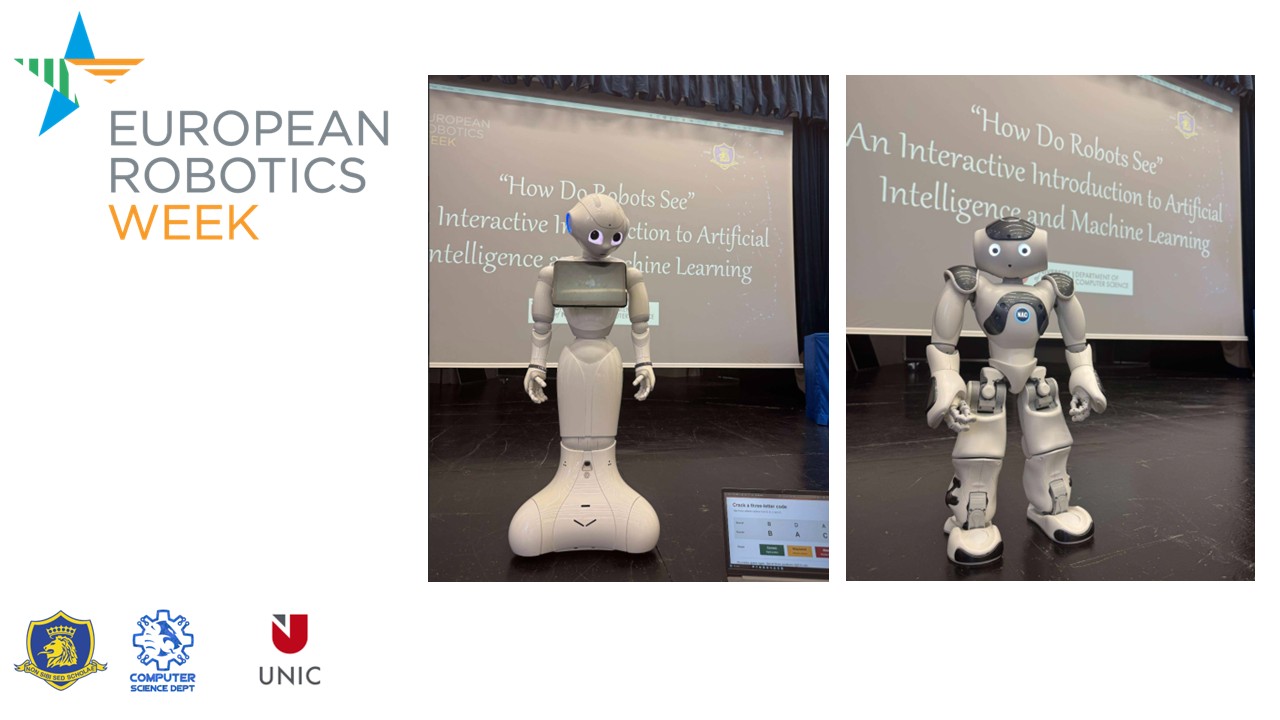
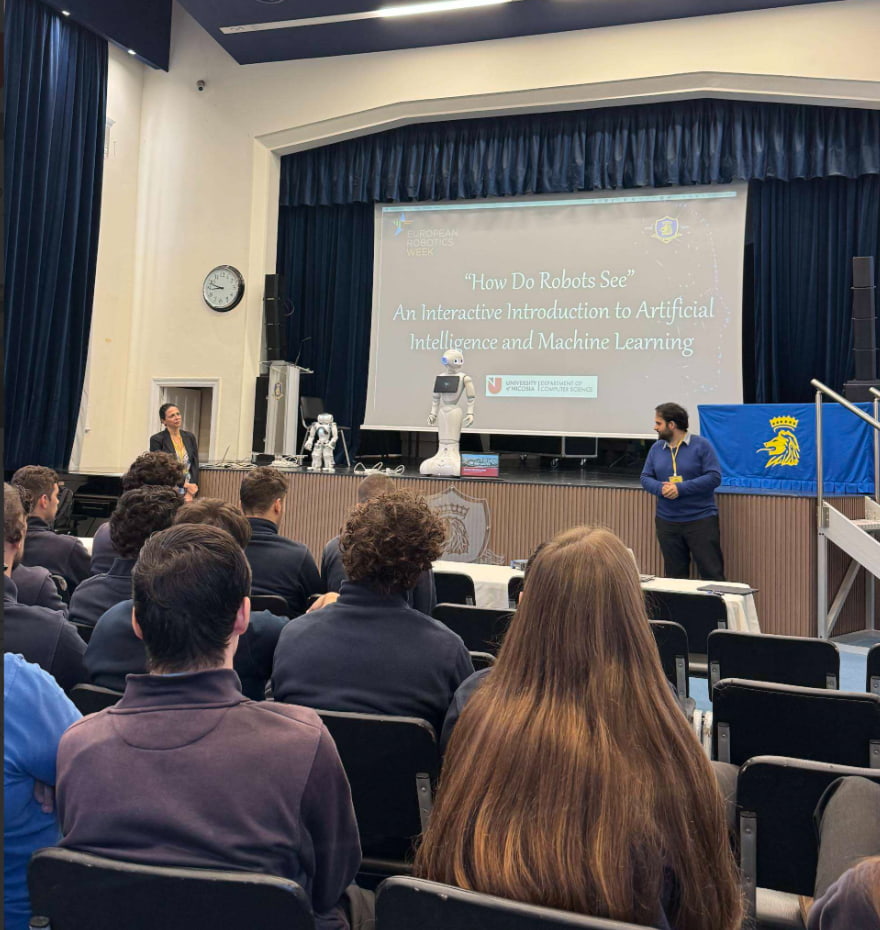
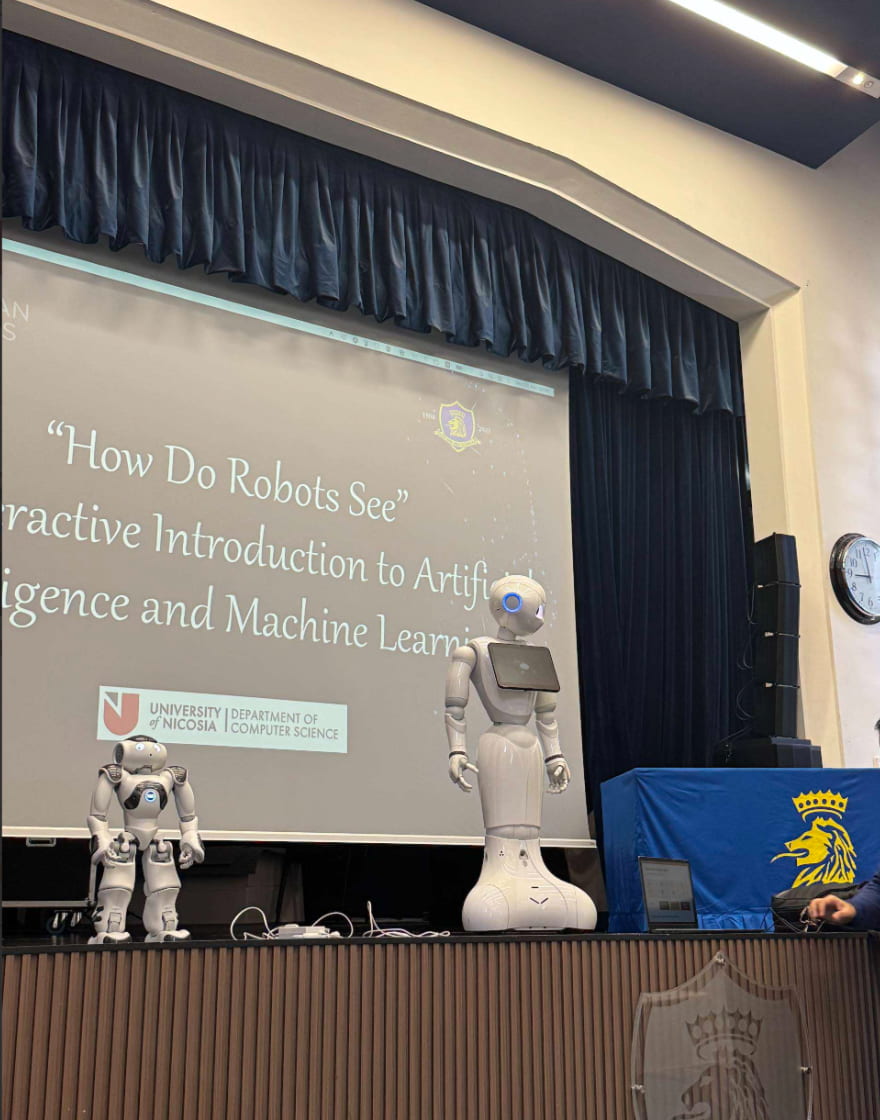
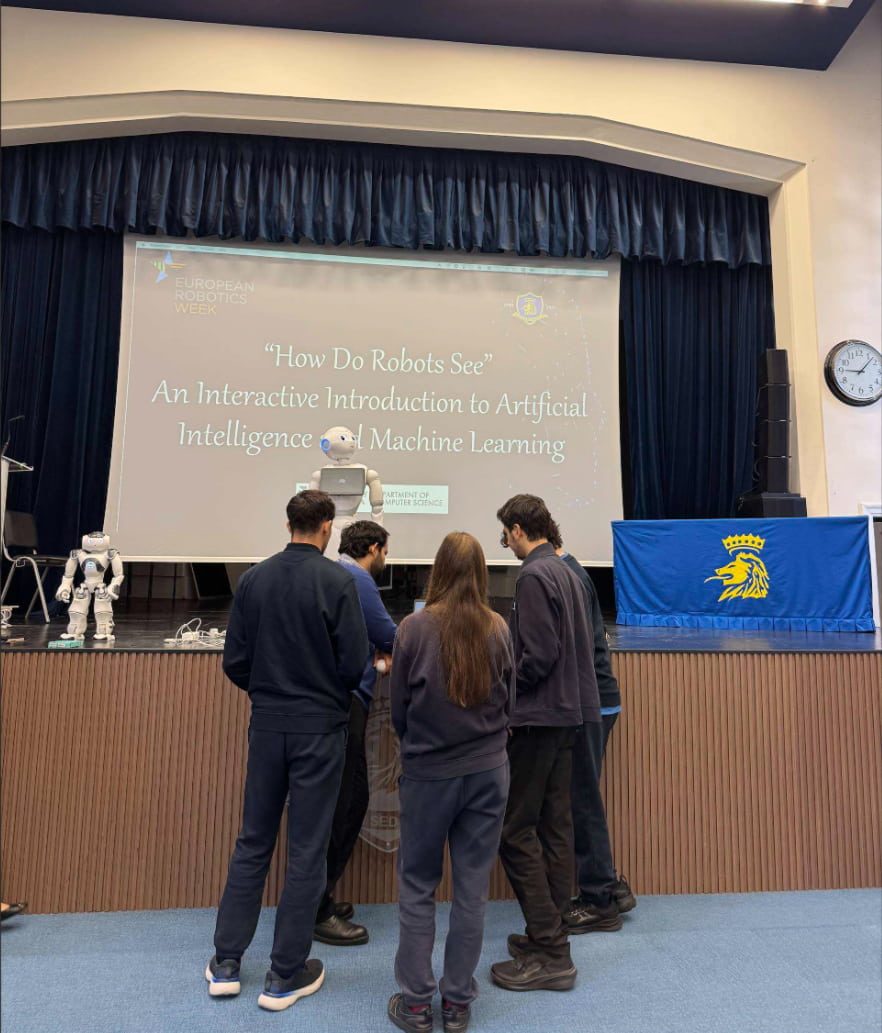
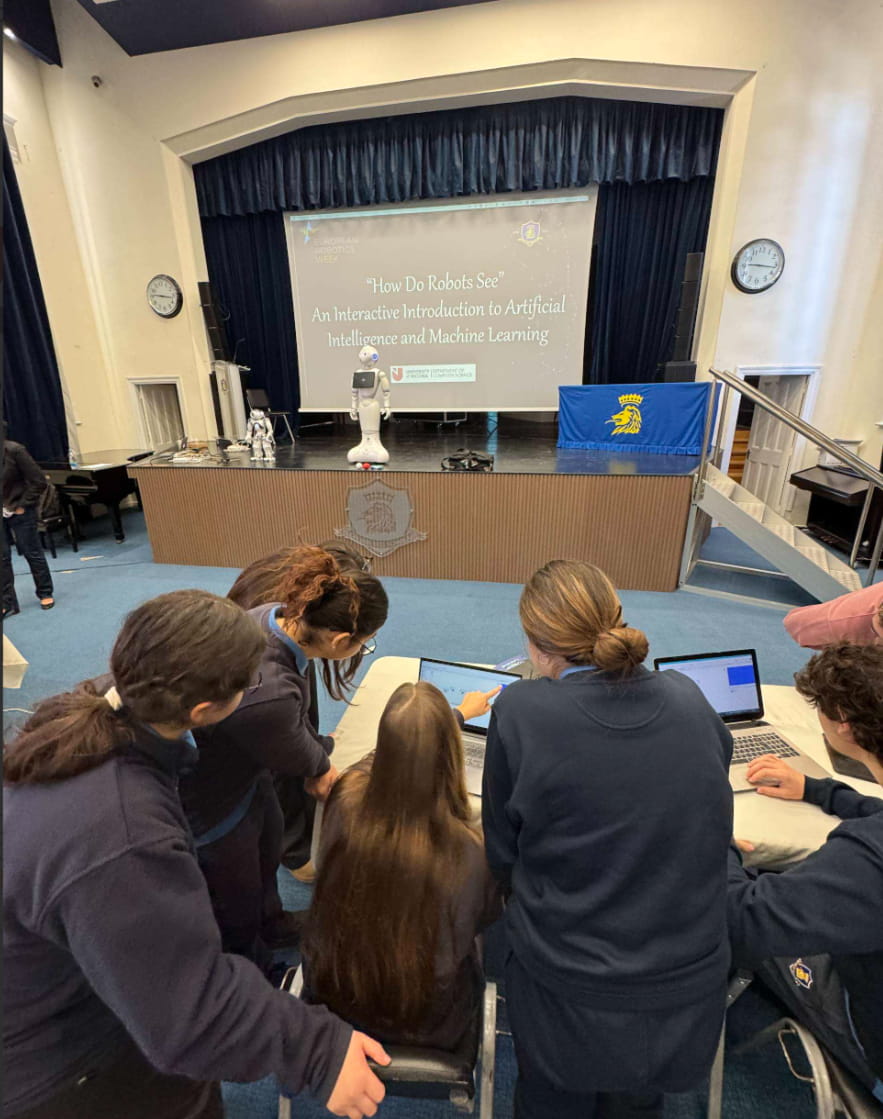
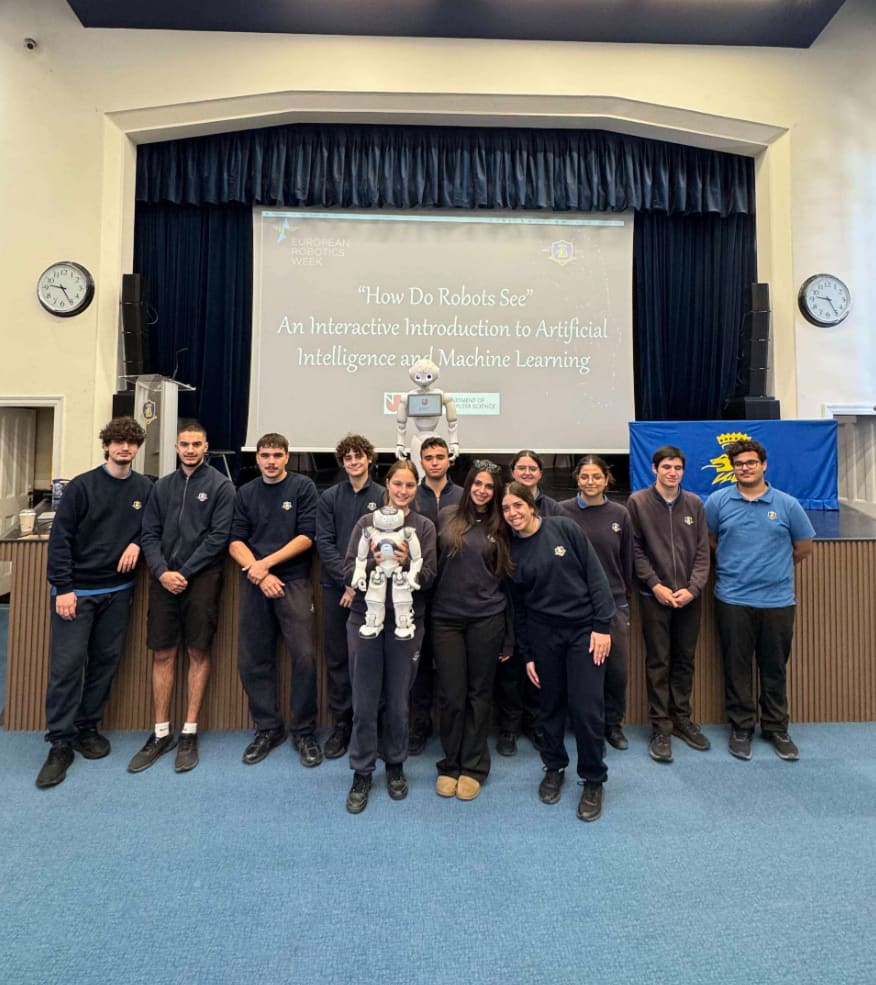
To mark European Robotics Week 2026, The English School joined forces with the University of Nicosia’s Department of Computer Science to organise an exciting AI and robotics event, offering students the opportunity to explore the fascinating world of artificial intelligence, machine learning and robotics.
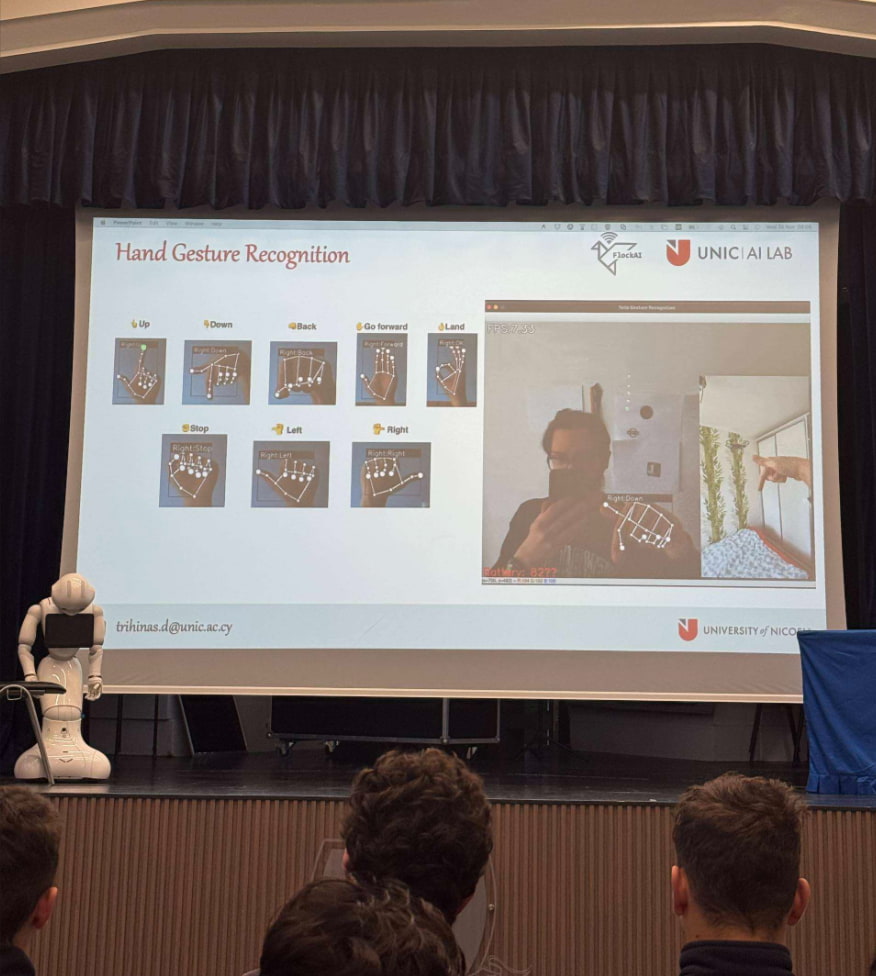
The morning began with an engaging presentation introducing students to Artificial Intelligence (AI) and its practical applications. Through examples of how robots recognise objects and gestures, students explored the differences between training AI models to learn from examples and traditional programming, where instructions are explicitly defined.
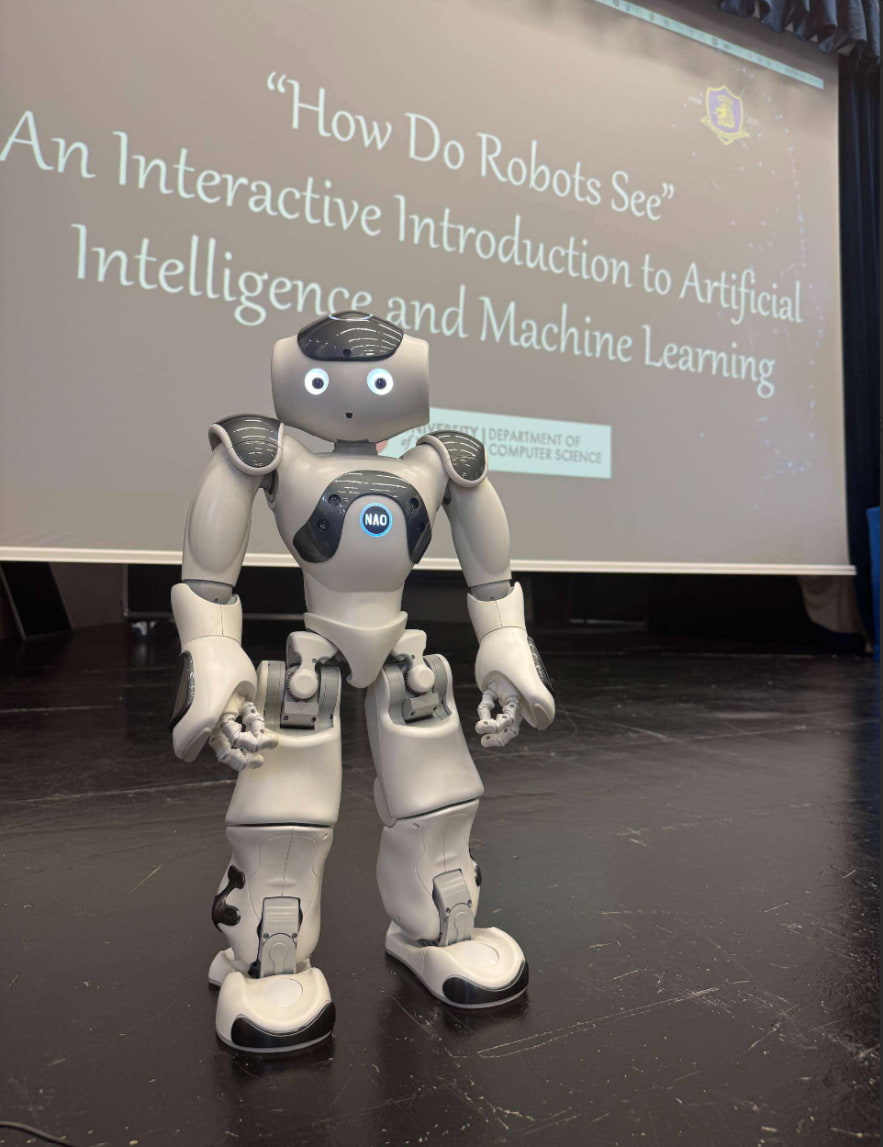
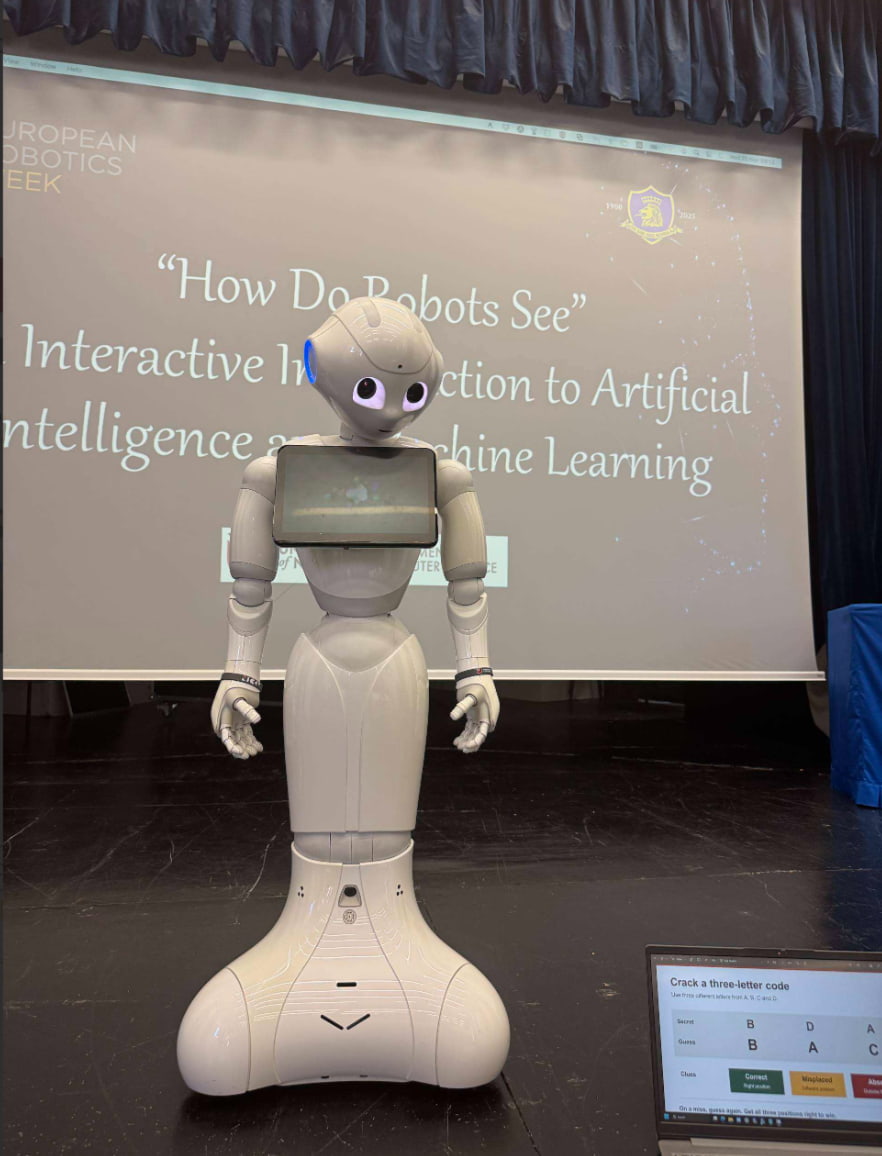
Following the presentation, Year 6 and Year 7 students participated in an interactive, hands-on workshop, designing their own Gesture Codebreaker game. Using Teachable Machine, students trained an AI model to recognise gestures and then used Choregraphe, a robot application workflow designer, to programme two robots provided by the University.
The challenge involved presenting the robot with a sequence of gestures to crack a secret code, with the robot providing clues after each attempt to help players identify the correct sequence. This activity gave students valuable practical experience in AI, programming, problem-solving and computational thinking.
Meanwhile, Year 4 students enjoyed the opportunity to meet and interact with the robots through guided demonstrations, discovering how robots can move, hold conversations, play games and recognise objects.
We were delighted to welcome a team of experts from the University of Nicosia, including:
– Professor Athena Stassopoulou, Head of the Department of Computer Science and Director of the AI Lab
– Dr Demetris Trihinas, Assistant Professor and Coordinator of the BSc in Data Science
– Dr Ali Tayari, AI and Machine Learning Engineer at the University of Nicosia and a graduate of the Department
The event provided an excellent opportunity for our students to experience emerging technologies first-hand, develop their curiosity and gain a deeper understanding of the growing role of artificial intelligence in our everyday lives.
Our sincere thanks to the University of Nicosia and its team for their valuable collaboration and for inspiring the next generation of innovators, programmers and problem-solvers!